
 Get A Quote

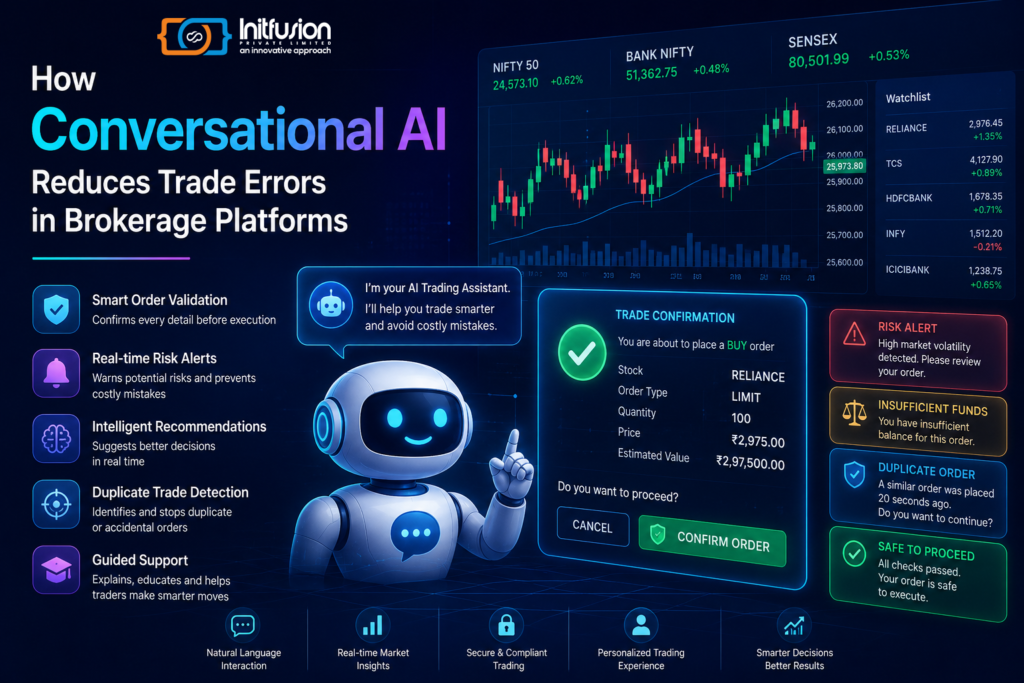
In the fast-paced world of online trading, even a small mistake can lead to significant financial losses. Errors such as selecting the wrong stock, entering an incorrect order quantity, choosing the wrong order type, or placing duplicate trades can negatively impact both traders and brokerage firms. As trading platforms continue to attract millions of retail and institutional investors, ensuring accuracy, speed, and security has become more important than ever.
This is where conversational AI is making a meaningful difference. By combining Natural Language Processing (NLP), machine learning, and real-time analytics, AI-powered virtual assistants help traders verify orders, receive instant risk alerts, and make informed decisions before executing trades. As a result, brokerage platforms can reduce costly trade errors, improve customer confidence, and deliver a smarter, more seamless trading experience.
Conversational AI is transforming the trading experience by providing intelligent, real-time assistance that helps users make accurate trading decisions while minimizing costly mistakes. By integrating AI-powered chatbots and virtual assistants into brokerage platforms, companies can improve user experience, reduce operational risks, and increase customer confidence.
What is Conversational AI in Brokerage Platforms?
Conversational AI combines Natural Language Processing (NLP), machine learning (ML), and generative AI to enable users to interact with trading platforms using natural language. Instead of navigating multiple screens, traders can ask questions, execute commands, receive market insights, and verify trade details through an AI assistant.
Examples include:
- Portfolio assistance
- Trade confirmations
- Market updates
- Order explanations
- Risk alerts
- Investment education
Common Trade Errors in Brokerage Platforms
Many trading mistakes occur because of manual input or lack of information. Some common errors include:
- Incorrect stock ticker selection
- Wrong order quantity
- Buying instead of selling
- Selecting the wrong order type (Market vs. Limit)
- Entering incorrect price values
- Duplicate order placement
- Trading without understanding associated risks
These mistakes can result in financial losses and increased customer support requests.
How Conversational AI Reduces Trade Errors
1. Smart Order Validation
Before submitting an order, Conversational AI verifies key trade details.
Example:
“You’re about to buy 1,000 shares of XYZ at market price. Would you like to review this order before execution?”
This extra confirmation helps prevent accidental trades.
2. Natural Language Trade Assistance
Users can simply type:
- Buy 50 shares of Apple.
- Sell my Tesla holdings.
- Show today’s profit and loss.
The AI interprets the request accurately while reducing navigation mistakes.
3. Real-Time Risk Warnings
AI identifies potentially risky actions before execution.
For example:
- Insufficient balance
- High market volatility
- Large order size
- Margin requirements
- Duplicate trades
This proactive guidance helps users make informed decisions.
4. Intelligent Order Recommendations
Conversational AI can recommend better order types.
Example:
“The market is highly volatile. A limit order may help control your purchase price.”
Such recommendations reduce execution risks.
5. Duplicate Trade Detection
Sometimes users accidentally place the same order multiple times due to slow internet or repeated clicks.
AI can instantly notify users:
“A similar order was placed 20 seconds ago. Do you still want to continue?”
6. Context-Aware Conversations
Instead of generic responses, conversational AI remembers the user’s current trading activity.
Example:
User:
Buy Reliance.
AI:
You currently own 100 shares. Would you like to increase your position or review your existing holdings first?
This contextual assistance minimizes confusion.
7. Instant Market Information
Many trading errors happen because users rely on outdated information.
Conversational AI can instantly provide:
- Live market prices
- Company news
- Earnings announcements
- Dividend updates
- Analyst summaries
Access to timely information supports better trading decisions.
8. Educational Guidance for Beginners
New investors often misunderstand trading terminology.
AI explains concepts such as
- Market Order
- Limit Order
- Stop Loss
- Margin Trading
- Leverage
- Short Selling
This educational support helps users avoid beginner mistakes.
Benefits for Brokerage Platforms
Integrating Conversational AI offers multiple advantages:
- Reduced trading errors
- Higher customer satisfaction
- Lower support costs
- Faster trade execution
- Increased platform engagement
- Better regulatory compliance
- Improved user retention
- Personalized customer experience
Real-World Use Cases
Brokerage firms are using Conversational AI for:
- AI-powered customer support
- Order confirmation assistants
- Portfolio management guidance
- Market research assistance
- Investment recommendations
- Fraud detection alerts
- Compliance notifications
- Voice-enabled trading support
Best Practices for Implementing Conversational AI
To maximize effectiveness:
- Integrate with real-time market data.
- Use secure authentication for trading actions.
- Include trade confirmation before execution.
- Provide personalized responses based on user portfolios.
- Maintain complete audit logs for compliance.
- Continuously train AI models using user feedback.
The Future of AI-Powered Brokerage Platforms
As generative AI and large language models continue to evolve, brokerage platforms will become more intelligent and proactive. Future AI assistants may predict user intent, identify risky trading patterns, automate routine investment tasks, and provide highly personalized financial guidance while maintaining regulatory standards.
Brokerage firms that adopt Conversational AI today will be better positioned to deliver safer, faster, and more intuitive trading experiences.
Conclusion
Conversational AI is reshaping the brokerage industry by reducing trade errors, improving decision-making, and enhancing customer interactions. Through intelligent order validation, real-time risk alerts, contextual assistance, and personalized support, AI-powered brokerage platforms help traders execute orders with greater confidence and accuracy.
As financial markets become increasingly digital, conversational AI is no longer just a customer support tool—it’s a strategic asset for building secure, efficient, and user-friendly brokerage platforms.
